
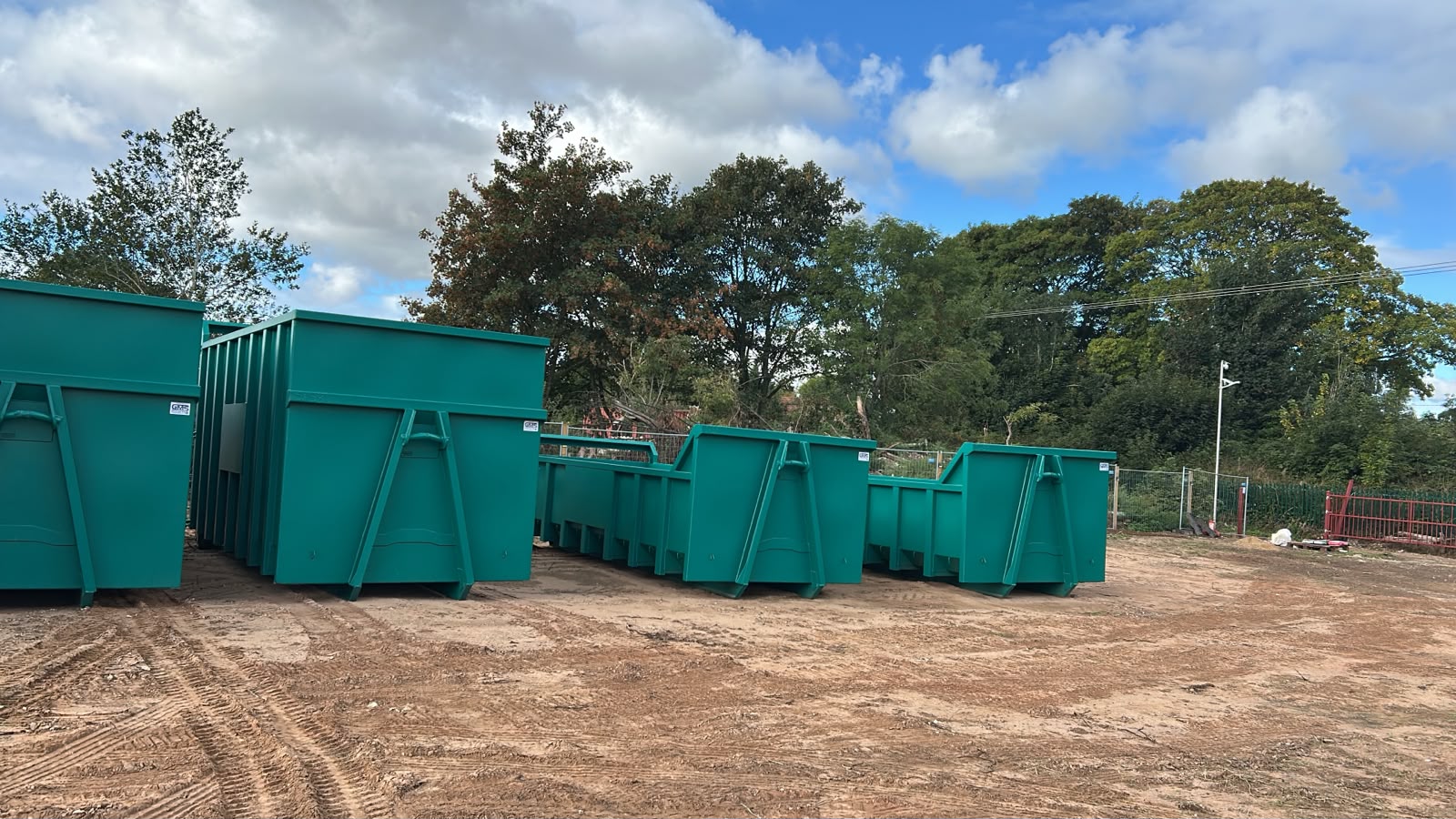
Choosing the Right RoRo Skip: Sizes, Dimensions & Waste Types
If your project is generating large amounts of waste, a roll-on roll-off (RoRo) skip can provide a practical solution.
However, choosing the right skip isn't simply about selecting the largest container available. The type of waste, its weight, available space and collection requirements all need to be considered.
At Smart Environmental, we provide 20 and 40-yard RoRo skip hire across Nottinghamshire, Derbyshire and surrounding areas.
This guide explains how RoRo skips work, their approximate dimensions, what waste they can accommodate and how separating different waste types could help reduce your disposal costs.
What is a RoRo skip?
A roll-on roll-off skip, commonly known as a RoRo skip, is a large waste container designed for projects that produce substantial quantities of waste.
Unlike conventional smaller skips, RoRo containers are delivered and collected using specialist vehicles.
They are commonly used for:
- Construction and demolition projects.
- Commercial and industrial waste.
- Building and site clearances.
- Agricultural projects.
- Ongoing projects requiring regular waste collections.
RoRo skips offer greater capacity than conventional skips, helping reduce the need for frequent collections where the waste type and available space make them suitable.
For more information about our containers and services, visit our RoRo Skip Hire page.
What sizes do RoRo skips come in?
At Smart Environmental, we supply two sizes of RoRo skip: 20 yards and 40 yards.
Both provide substantial waste capacity, but they are designed for different waste requirements.
20-Yard RoRo Skips
Our 20-yard RoRo skips are suitable for a range of commercial, construction and demolition waste.
They can accommodate agreed heavier materials, including brick, hardcore, soil and rubble, subject to safe loading and weight limits.
They are also suitable for many lighter waste streams.
A 20-yard skip may be appropriate for demolition projects, construction sites and clearances involving heavier materials.
40-Yard RoRo Skips
Our 40-yard RoRo skips provide approximately twice the volume of a 20-yard container.
They are intended for large quantities of lighter, bulkier waste, such as suitable wood, green waste and other agreed materials.
Important: Our 40-yard RoRo skips must not be used for heavy materials such as soil, hardcore, rubble or concrete.
A larger container does not necessarily mean it can carry a heavier load.
RoRo Skip Sizes and Approximate Dimensions
The measurements below are approximate and provided to help you plan your project.
20-Yard RoRo Skip
Length: Approximately 6.1 metres
Width: Approximately 2.4 metres
Height: Approximately 1.2–1.5 metres
Capacity: 20 cubic yards (approximately 15.3 m³)
Suitable for: Construction and demolition waste, including suitable brick, hardcore, soil and rubble, subject to agreed loading limits.
40-Yard RoRo Skip
Length: Approximately 6.1 metres
Width: Approximately 2.4 metres
Height: Approximately 2.4–2.7 metres
Capacity: 40 cubic yards (approximately 30.6 m³)
Suitable for: Larger volumes of lighter, bulkier waste.
Heavy materials such as soil, hardcore, rubble and concrete must not be placed in our 40-yard RoRo skips.
Important Information About Skip Dimensions
All measurements are approximate and may vary between containers.
These are indicative measurements rather than confirmed dimensions of individual Smart Environmental skips.
If space or access is restricted, please contact us before booking so we can confirm the measurements of the container being supplied.
Additional space is also required for the delivery vehicle to manoeuvre, unload and collect the skip safely.
What Waste Can Go in a RoRo Skip?
At Smart Environmental, we provide RoRo skips for a wide range of waste types.
We can supply dedicated skips for individual materials or mixed waste skips where separating waste isn't practical.
Wood Waste
Suitable timber, wooden packaging, pallets and construction wood waste.
A dedicated wood skip can help keep timber separate from other materials and may reduce disposal costs.
Metal Waste
Suitable scrap metal, metal offcuts and other agreed metal waste.
Keeping metal separate can make recycling easier and may offer a more cost-effective disposal option.
Green Waste
Suitable branches, hedge cuttings, vegetation and other agreed landscaping waste.
Dedicated green waste skips help prevent contamination from general construction waste.
Mixed Waste
A combination of suitable general, commercial and construction waste.
Mixed waste skips are useful when separating individual materials isn't practical. However, mixed loads may cost more to process and dispose of than segregated waste.
Hardcore
Suitable brick, concrete, masonry and other agreed hardcore materials.
Hardcore is heavy and must only be loaded into an appropriate container within agreed weight limits.
Soil
Suitable soil from excavation, groundworks and clearance projects.
Soil must be accurately described and assessed where necessary. It should not automatically be assumed to be uncontaminated or inert simply because it looks clean.
Rubble
Suitable brick, block, concrete and other agreed demolition rubble.
Rubble is a heavy waste stream and must be loaded into a suitable container within the agreed weight limits.
Inert Waste
Suitable uncontaminated materials that meet the relevant waste acceptance requirements, such as certain brick, concrete and stone waste.
Not all construction waste is inert. The waste must be correctly identified and classified before disposal.
For more information about your responsibilities when disposing of waste, see the Waste Duty of Care Code of Practice.
External link: https://www.gov.uk/government/publications/waste-duty-of-care-code-of-practice
Is It Cheaper to Separate Waste Rather Than Use a Mixed Waste Skip?
Separating waste into dedicated skips can often reduce disposal costs.
Mixed waste generally requires additional sorting and processing, whereas correctly segregated materials may be easier to send for suitable recovery or recycling.
For example, a construction project might generate:
- Wood from timber and offcuts.
- Metal from structural work.
- Hardcore from demolition.
- Mixed waste from general site activities.
Instead of placing everything into one mixed waste container, it may be more cost-effective to arrange separate skips for the larger waste streams.
What Are the Benefits of Dedicated Waste Skips?
Potentially Lower Disposal Costs
Certain segregated waste streams may attract lower disposal charges than mixed waste.
Improved Waste Management
Dedicated containers make it easier to keep different materials separate and avoid unnecessary contamination.
Better Opportunities for Recovery and Recycling
Separating suitable materials can make subsequent processing and recovery easier.
A More Organised Site
Clearly identified waste containers can help workers dispose of materials in the correct location.
The most cost-effective arrangement depends on waste quantities, available space, collection frequency and disposal requirements.
A mixed waste skip may still be the practical choice where quantities are small or there isn't enough room for multiple containers.
At Smart Environmental, we can discuss your waste streams and recommend a suitable arrangement before providing a quotation.
Can You Mix Different Waste Types in a RoRo Skip?
Yes. We provide mixed waste skips for suitable, agreed materials.
However, not all materials can be mixed.
Hazardous waste must not be placed in a general waste RoRo skip, and certain materials require separate collection or disposal arrangements.
If your project generates substantial quantities of wood, metal, hardcore or other individual waste streams, consider whether dedicated containers would offer better value.
Please tell us what materials your project will produce so we can confirm the appropriate arrangements.
What Waste Cannot Go in a RoRo Skip?
Certain materials cannot be placed in our general waste RoRo skips without separate, specifically agreed arrangements.
These include:
- Asbestos.
- Hazardous chemicals.
- Oils, paints and liquids.
- Gas cylinders and pressurised containers.
- Batteries.
- Electrical equipment requiring separate disposal.
- Tyres and other materials requiring specialist disposal.
This list is not exhaustive.
If you're unsure whether a particular material can be accepted, please contact us before placing it in the skip.
What About Asbestos Waste?
Asbestos must never be placed in a general waste RoRo skip.
We provide dedicated Asbestos Skip Hire using enclosed containers for agreed asbestos waste.
Asbestos requires separate handling, containment, transport and disposal arrangements.
How Much Space Do You Need for a RoRo Skip?
RoRo skips require considerably more space than conventional skips, particularly during delivery and collection.
The skip's dimensions are only one part of the space required. The delivery vehicle also needs sufficient room to manoeuvre and operate safely.
Before arranging delivery, consider the following.
Vehicle Access
Are entrances and access routes wide enough for a large delivery vehicle?
Overhead Obstructions
Are there any low branches, cables, structures or other overhead hazards?
Ground Conditions
Is the proposed placement area level, stable and capable of supporting the container and delivery vehicle?
Collection Access
Will the skip remain accessible once it has been loaded?
Other Site Activities
Could parked vehicles, machinery, stored materials or ongoing construction work obstruct delivery or collection?
If you're unsure whether your site is suitable, discuss the access arrangements with us before booking.
For further information about safe storage and site arrangements, see the HSE's Materials Storage Guidance.
External link: https://www.hse.gov.uk/construction/safetytopics/storage.htm
How Long Can You Hire a RoRo Skip?
Our standard hire period is 14 days.
If your project requires the skip for longer, extensions of up to 28 days may be arranged in advance, subject to availability and agreement.
If you finish earlier, simply contact us to arrange collection.
For ongoing construction and commercial projects, we can also discuss regular skip exchanges and collection arrangements.
Further information is available in our Skip Hire Terms & Conditions.
How Much Does RoRo Skip Hire Cost?
RoRo skip hire prices depend on several factors.
These include:
- The size of skip required.
- The type of waste being collected.
- Whether the waste is mixed or segregated.
- The delivery and collection location.
- The hire period and collection requirements.
A 40-yard skip isn't automatically the cheapest option simply because it offers more capacity. If you're disposing of heavy waste, a 20-yard container may be the appropriate choice.
Similarly, a dedicated skip for a particular waste stream may offer better value than a mixed waste skip.
We provide quotations based on your individual requirements.
Choosing the Right RoRo Skip: Our Advice
Before arranging a RoRo skip, consider these five questions.
1. What Waste Will Your Project Produce?
Identify the materials and whether they can be separated into individual waste streams.
2. How Much Waste Do You Expect?
Estimate the volume of waste and consider whether it will be produced all at once or throughout the project.
3. Is the Waste Heavy or Lightweight?
Heavy materials such as brick, hardcore and soil require a suitable container with appropriate loading limits.
4. Is There Enough Space on Site?
Consider both the container dimensions and the space needed for safe vehicle access.
5. Will You Need Regular Collections?
Ongoing projects may benefit from planned skip exchanges rather than waiting until a container is full.
If you're unsure, we'll help you choose an appropriate skip based on your waste and site requirements.
RoRo Skip Hire Across Nottinghamshire and Derbyshire
Smart Environmental provides 20 and 40-yard RoRo skip hire for construction, demolition, commercial, agricultural and clearance projects.
Our service areas include:
- RoRo Skip Hire Nottingham
- RoRo Skip Hire Mansfield
- RoRo Skip Hire Derby
- RoRo Skip Hire Chesterfield
- RoRo Skip Hire Newark
We also cover surrounding areas throughout Nottinghamshire, Derbyshire and the wider Midlands.
Whether you need a dedicated skip for wood, metal, soil or hardcore, or a mixed waste container for a larger project, we can help you choose a suitable option.
Need a RoRo Skip for Your Project?
Contact Smart Environmental to discuss your waste requirements, skip sizes and collection arrangements.
We can also advise whether using dedicated skips for separate waste streams could help reduce your disposal costs.
Call 01623 272 919 for a quotation.